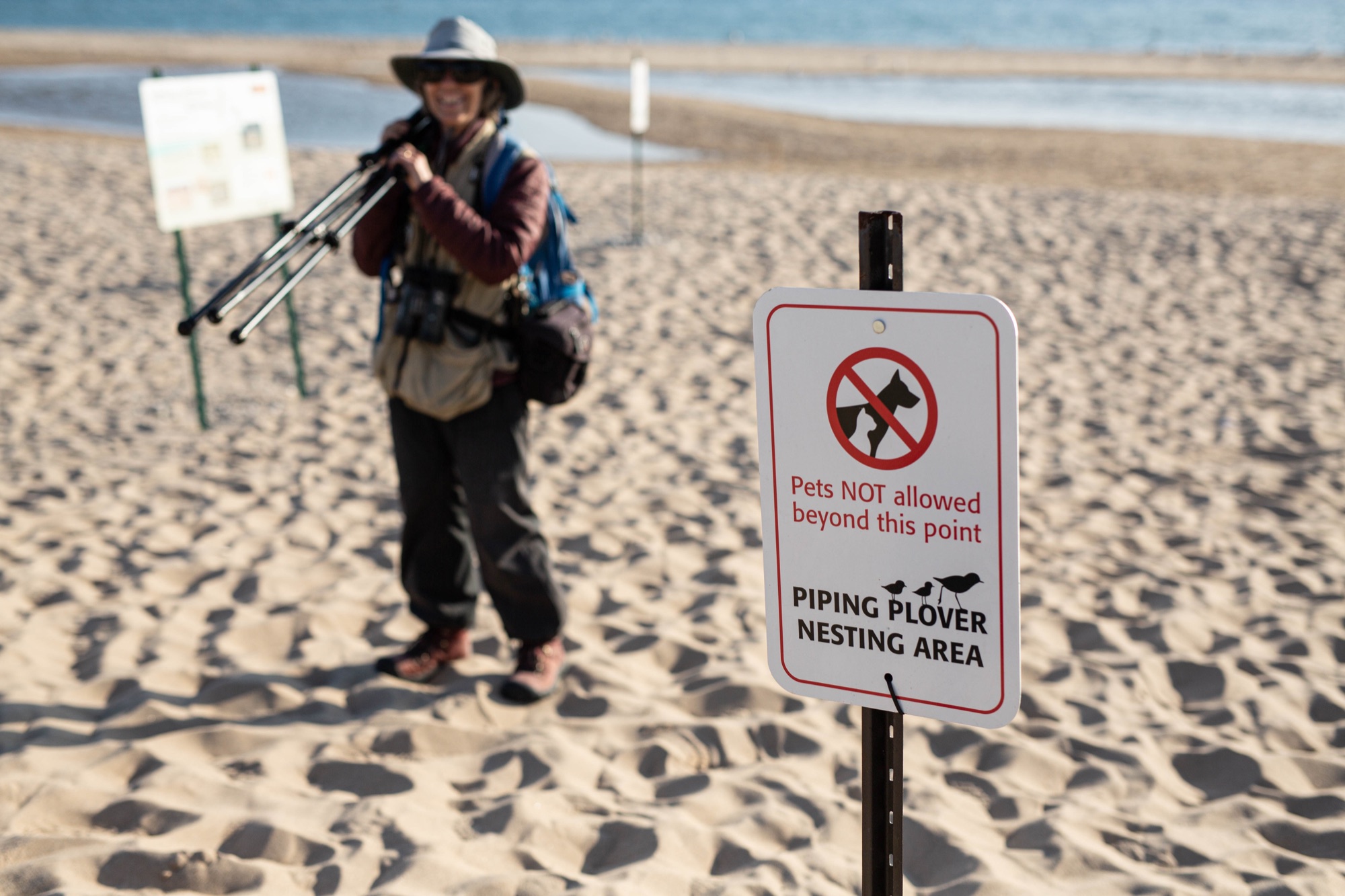
Alice Van Zoeren stands watch on the sands of Sleeping Bear Dunes National Lakeshore. She has come to these shores for years as a guardian. She searches to find, defend and protect the endangered bird known as the Piping Plover.
These little birds weigh about two AA batteries. They nearly disappeared from the Great Lakes in the mid 1980s, but thanks to people like Van Zoeren they are on the rebound. Now about 75 pairs of the birds call the Great Lakes home, and their highest concentration is in Sleeping Bear, including North and South Manitou Islands.
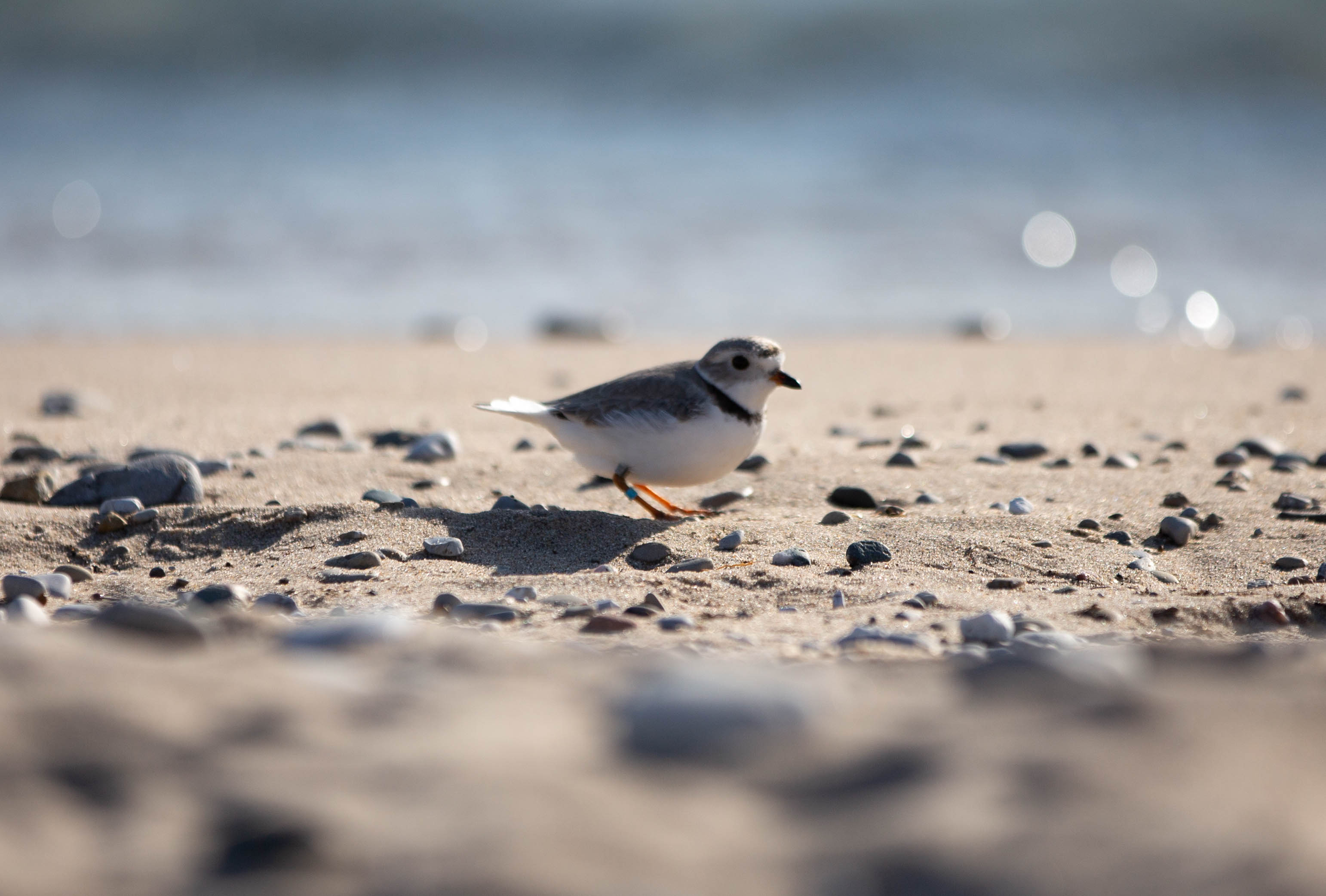
Protecting the Piping Plover is no small task since the birds nest in some of the favorite locations for humans and predatory animals. "The chicks can't fly for the first 25 days and that's when they are most vulnerable," said Dr. Sarah Saunders, a Quantitative Ecologist at the National Audubon Society.
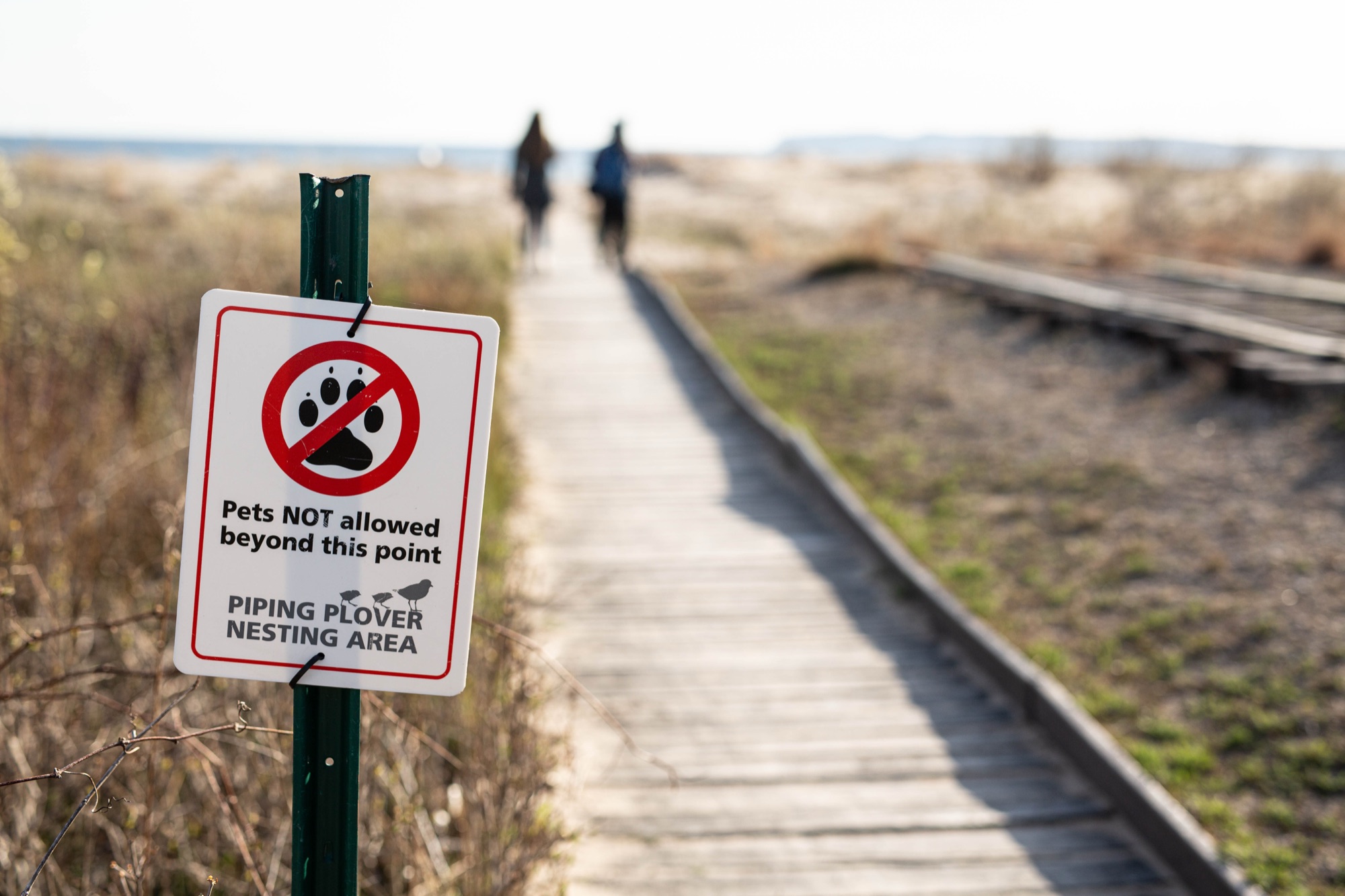
Saunders says their greatest threat could be man's best friend, the dog. When dogs are off leash along the shoreline, they can disturb eggs or chicks, or scare the adult bird away from the nest. "The rule of thumb is to stay 100 feet away from nesting birds," said Saunders. "We need to give the birds space to nest and rest."
The Piping Plover is a creature of habit and will often return to familiar nesting areas. That allows guardians like Van Zoeren to track most, if not all the new nests at Sleeping Bear Dunes National Lakeshore. Once identified, they will set up a four-foot protective cage around the nest. Signs are posted to keep people 100 feet away.
"They are an important part of the Great Lakes ecosystem," said Saunders. "We all rely on healthy shorelines, and so does the Piping Plover. It shows our interconnectedness with all of us on the earth. It comes full circle."
Great progress has been made since the 1980s when only 17 Piping Plover existed in the Great Lakes. That number is up to 75 now, about halfway to the recovery goal. There is still a long way to go, and you can help by following a few simple guidelines set by the National Audubon Society and the National Park Service:
- Keep dogs on a leash when on trails or shoreline.
- Stay clear of Piping Plover nesting areas.
- Stay on marked trails.
Find more information at: www.greatlakespipingplover.org.